

Jensen Huang Declared ‘AGI Has Arrived.’ His Own Earnings Call Sounded a Lot More Cautious.
Nvidia CEO Jensen Huang's AGI declaration contrasts with the company's cautious stance on China market revenue.
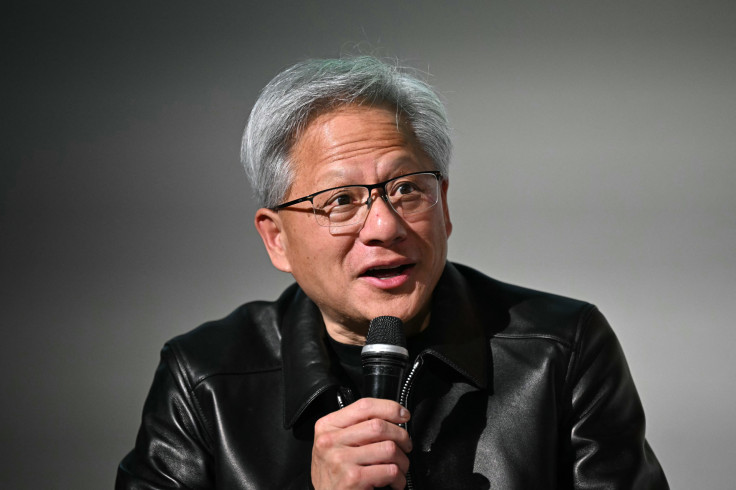
Over the weekend, Nvidia CEO Jensen Huang used two words to reframe the AI race: "AGI has arrived." He credited OpenAI's newly launched GPT-6 Astra, noting it had been trained on more than 100,000 Nvidia Grace Blackwell NVLink72 systems, with another 400,000 GPUs "coming online" next. It is the kind of statement that gets read as pure confidence — in OpenAI's model, and implicitly in Nvidia's hardware as the thing that made it possible. Yahoo!
Set that statement next to what Nvidia's own executives said on the earnings call less than two weeks earlier, and the picture gets more complicated. Announcing second-quarter results, Nvidia's finance chief Colette Kress told analysts: "Given ongoing geopolitical uncertainty, there is no China data center compute revenue in our forward outlook." Nvidia's own guidance filing said the same thing more bluntly: it is "not assuming any Data Center compute revenue from China in its outlook." That's not caution about a marginal business line — China had still accounted for $7.9 billion, or 8.2%, of Nvidia's total quarterly revenue, and it's a market Nvidia has now decided it cannot even forecast.
The two statements didn't come from different companies or even different weeks of messaging — they came from the same executive team, in the same reporting cycle, describing the same business. One register is expansive: a civilization-scale technological threshold, crossed, with hundreds of thousands more GPUs already lined up behind it. The other is defensive: an acknowledgment that an entire national market has become too unpredictable to put a number on, so Nvidia simply left it out.
That's not necessarily a contradiction — a company can be confident about its technology roadmap while being genuinely unable to predict a specific country's regulatory path. Export-control cycles on advanced AI accelerators, in place since late 2023, have gone through repeated rounds of approval and reversal, and Nvidia's own framing of the China exclusion has leaned into the idea that its growth no longer depends on that market. Read generously, the AGI post and the China hedge are just two facts about the same company: extraordinary confidence in the compute buildout it controls, and honest uncertainty about the politics it doesn't. EAI GlobalThe Motley Fool
But that's exactly what makes the pairing worth noticing rather than reading each statement in isolation. One of the more skeptical English-language write-ups on the AGI claim argued that the "AGI has arrived" line is rhetoric layered on top of a real hardware number rather than a new technical result — but even that critique stayed inside the AGI debate itself, weighing Huang's claim against benchmark scores and definitional disputes. AI researcher Gary Marcus made a similar point more sharply, calling the declaration premature "with no evidence and no definitions." None of that commentary reached back to the earnings call that had wrapped up just days earlier, where the same company was asking investors to accept a forecast built on excluding, rather than estimating, one of its largest addressable markets. ExplainxBenzinga
Put plainly: the sweeping, headline-friendly claim and the narrow, risk-averse one both came from Nvidia's leadership within roughly a ten-day window. Investors and readers reacting to the viral post are, in effect, absorbing only the confident half of what the company has been saying about itself this quarter.