

CFMOTO’s $92.6 Million Tariff Refund Won’t Repeat — Here’s Why It Still Matters
Zhejiang-based CFMOTO receives largest US tariff refund among Chinese firms, impacting 2026 earnings.
Zhejiang-based CFMOTO disclosed on September 7 that its US subsidiary, CFMOTO Powersports Inc. (CFP), has now received a cumulative $92.64 million in refunded US tariffs and interest — about 628 million yuan — since the payments started arriving in August. The company expects the money to lift 2026 net profit by roughly 440 million yuan, equal to more than a quarter of what it earned in its last audited fiscal year. It is, by a wide margin, the largest tariff refund collected by any Chinese listed company so far, a status it already held last month with a smaller first installment that Nikkei Asia flagged in mid-August as the biggest of its kind. The new, larger cumulative figure has not yet been reported in English-language media.
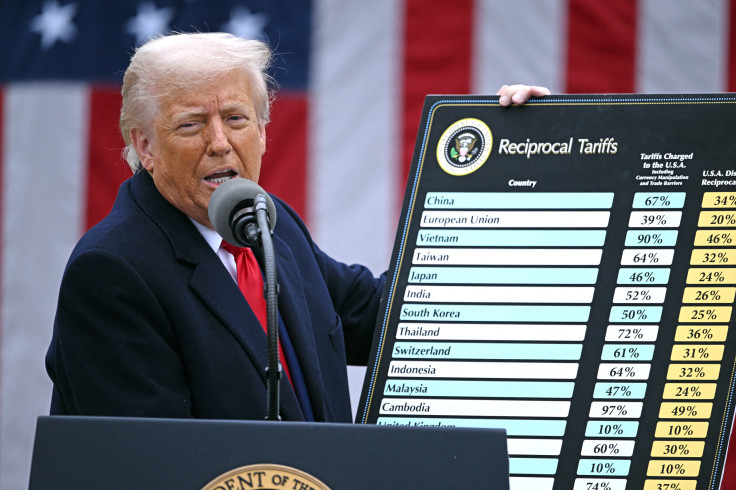
The refund traces back to a February 2026 US Supreme Court ruling that the executive branch lacked authority under the International Emergency Economic Powers Act to impose the tariffs in the first place — meaning the money CFMOTO is getting back is a court-ordered correction of an illegal charge, not a policy favor or a new source of earnings.
That distinction matters more than the headline number suggests. Analysts have used a version of this argument before, but only about American importers: Apple, Nike and Walmart have all been told by Wall Street to treat tariff refunds as a one-off recovery of historical costs rather than a signal of improving margins, because the money reflects tariffs the company already paid and expensed in prior periods — it doesn't come with new orders, better pricing power, or a lower cost base going forward. Nobody has yet applied that same logic to a Chinese exporter. CFMOTO's refund is the clearest test case: the $92.6 million is backward-looking compensation for duties charged between April 2025 and February 2026, and it says nothing about what CFMOTO's US tariff bill will look like from here.
There's a second number that puts the refund in context. CFMOTO's first-half 2026 revenue rose 35.82% year-on-year to 13.4 billion yuan, but net profit attributable to shareholders grew just 6.26%, to 1.065 billion yuan — a gap large enough that some readers may assume the tariff refund exists to close it. It doesn't, at least not directly: the company's own filings attribute most of the first-half squeeze to a 256 million yuan foreign-exchange loss tied to the yuan's moves against the dollar, plus double-digit increases in R&D, sales and administrative spending, rather than to US tariffs specifically. The refund and the margin squeeze are both consequences of CFMOTO's exposure to the US market and the dollar, but they aren't simply mirror images of each other — a subtlety that gets lost if the refund is read purely as an offset to tariff-driven costs.
A third, more structural point explains why CFMOTO — and not one of its larger domestic rivals — ended up with the biggest refund check. To claim a refund at all, a company generally needs to be the importer of record on its own US customs entries, which requires operating a fully owned US import and distribution arm rather than routing sales through third-party dealers or distributors. CFP is exactly that kind of subsidiary. Chinese exporters that instead rely on independent US importers to bring their products across the border have no comparable standing to claim the money themselves, even if they ultimately bore the tariff's cost through lower wholesale prices. The "asset-light," distributor-based model that many exporters prefer for its lower overhead turns out to be a disadvantage when a tariff gets struck down after the fact.
Finally, the timing gap is worth flagging on its own. CFMOTO's operating cash flow for the first half of 2026 was 2.25 billion yuan, down 6.39% year-on-year — and that figure predates most of the tariff money, which arrived in August and September, after the half-year books had already closed. The refund will show up as an accounting profit boost in the second half, but investors comparing this year's book profit to last year's should keep in mind that the cash position it's built on didn't actually improve over the same stretch; the recovery is a paper adjustment to prior-period costs, not new cash generated by the underlying business in the period being compared.
None of this changes the scale of what CFMOTO recovered, which is real money and a legitimate one-time boost to 2026 earnings. It just means the boost tells you about a legal correction to 2025's tariff bill, not about how the business is performing today — and treating it as the latter is the mistake this specific refund, more than any other company's, is positioned to correct.
CFMOTO's final accounting treatment of the refund is subject to auditor confirmation, per the company's own disclosure, and could change from the estimates cited here.