

How Tesla’s Strategic Moves Boosted Cybercab’s Market Value
Tesla's Cybercab enters service in Austin, sparking investor optimism despite previous setbacks.
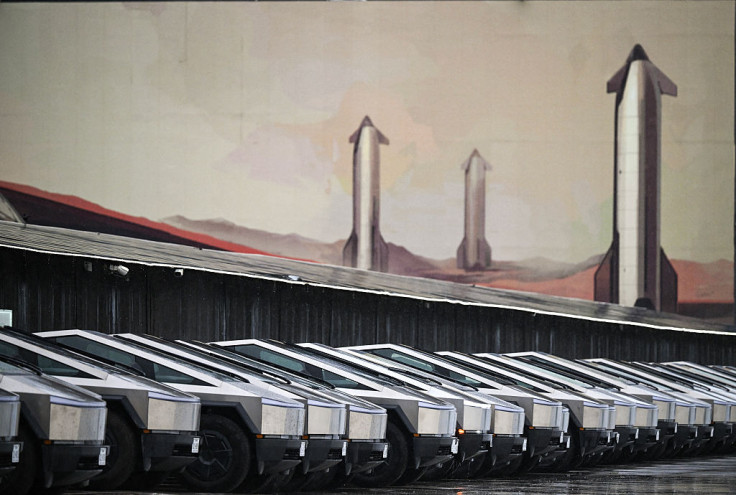
Tesla unveiled a driverless Cybercab a year ago and watched nearly $70 billion in market value disappear in a single day. This week it did almost the same thing again, and investors cheered instead. The difference has less to do with the car than with two dry filings: a Texas vehicle registry and a federal emissions form.
On Sept. 3, Tesla said its Cybercab had officially entered service in Austin, Texas, built without a steering wheel, pedals or mirrors, according to Cailian Press and National Business Daily, citing Tesla's official statement. Shares climbed 5.42% that day, closing at $376.37.
How far has "on the road" actually gotten?
Cybercab's passenger service is open only in parts of Austin, according to a passenger guide updated on Tesla's website and cited by National Business Daily on Sept. 4. Robotaxi rides in Tampa, Miami, Dallas and Houston are still handled by modified Model Y vehicles. In other words, Cybercab hasn't replaced Tesla's robotaxi fleet — it has simply shown its final form, in one part of one city.
The scale can be measured. Texas Department of Motor Vehicles data showed Tesla had 420 autonomous vehicles registered in the state as of Sept. 3, including 45 Cybercabs, National Business Daily reported. Robotaxi Tracker, a third-party crowdsourcing site cited by the outlet Teslarati, had put the number of Cybercab registrations at just seven a few days earlier — unofficial data, but pointing the same direction.
Those 45 vehicles landed almost exactly where Wall Street had drawn its line. Andrew Percoco, a Morgan Stanley analyst who covers Tesla, said before the launch that shares would rise if Tesla deployed 25 to 50 Cybercabs within days or weeks of the event — and fall if the company merely unveiled the car while putting few vehicles on the road, according to Cailian Press on Sept. 3.
The $20,000-versus-$150,000 number nobody can verify
The most widely repeated figure is a comparison: Cybercab costs $23,000 to $25,000 per vehicle, versus roughly $70,000 to $150,000 for a Waymo vehicle, according to pre-launch reporting by Cailian Press on Sept. 3. The report did not name the institution or methodology behind either number.
Two things are missing from that comparison. First, Tesla has never published a retail price or per-vehicle cost for Cybercab. The only official figure remains a target chief executive Elon Musk gave at the "WE, ROBOT" event in October 2024 — a cost below $30,000, alongside an operating-cost goal of about 20 cents a mile, Cailian Press reported at the time. That was an ambition, not an achieved result. Second, Waymo has never disclosed a full vehicle cost either. When it said in August that its own ASIC chip had gone into production, the company offered only a qualitative line — that a more purpose-built robotaxi design "is expected to reduce costs," according to Waymo's website, as cited by Cailian Press on Aug. 21.
So the cost gap compares a media estimate against a rival that hasn't published its own numbers. The only figures that can actually be verified come from a U.S. Environmental Protection Agency filing: a 48-kilowatt-hour battery, a single front motor rated at 163 kilowatts, a curb weight of about 1,412 kilograms, and a range of roughly 300 miles, versus 321 miles for a standard rear-wheel-drive Model Y.
What those figures show isn't a tenfold cost advantage. It looks closer to a subtraction exercise: two seats, no steering wheel or pedals, camera-only sensing, a smaller battery and a single motor. The savings come from stripping the car down to a pure operating tool, not from any technological breakthrough. Vehicle depreciation is only one line in a robotaxi's full operating cost — insurance, remote monitoring, cleaning, charging and idle time make up a much longer tail that sits outside what either company has disclosed.
Why the market said yes this time
The likelier explanation isn't that Cybercab itself improved — it's that Tesla changed how it communicates. After the October 2024 launch, Tesla shares closed down 8.78% the next day, after tumbling as much as 10% intraday, while Uber surged 10.81% and Lyft advanced strongly, up 9.59%, according to Cailian Press. In late July this year, Musk said Tesla would roll out its robotaxi service "cautiously," and shares plunged 14.5% the next day, Cailian Press reported. Notably, both double-digit declines followed a statement — not a launch event.
This time, Tesla led with paperwork instead of promises. It confirmed Cybercab production in April, completed registrations for 45 vehicles before the launch, and secured Nevada approval to deploy up to 5,000 robotaxis over the next 12 months, National Business Daily reported. For investors who have grown numb to slide decks, a registration count is worth more than a slogan — which is the most direct explanation for the 5.42% gain. Morgan Stanley has called the unveiling "far beyond a routine product event" in a research note; of its $400 price target for Tesla shares, $120 comes from the robotaxi business, the bank said.
The real test is software, not hardware
The bigger pressure sits on software, not hardware. Tesla said its robotaxi fleet is running an early test version of FSD — Full Self-Driving, the company's driver-assistance software — called V15, with seven major upgrades planned versus the prior version and about 40% of them already merged, National Business Daily reported. The head of Tesla's Autopilot team told investors on the second-quarter earnings call that the robotaxi service had logged more than 380,000 miles of unsupervised driving with no noteworthy accidents. That figure comes solely from the company; no third-party audit has verified it. Waymo, by comparison, published an article last month titled "10 AI Lessons From More Than 200 Million Miles of Fully Autonomous Driving" — a reminder that the argument over camera-only versus multi-sensor driving systems had already started before Tesla's event.
Signs of an actual business are fainter still. Before the launch, Tesla quietly added a form to its website for companies or individuals interested in buying Cybercab fleets, without specifying a sales model or delivery timeline, National Business Daily reported. That is not an order or a contract — it only raises the possibility that Tesla could sell cars to others to run their own robotaxi operations. Musk has described a different priority: he said on the second-quarter call that robotaxi economics are "extremely attractive," that demand could outstrip service capacity over the long run, and that Tesla sees no need to plug into third-party ride-hailing platforms for now. Running its own fleet and selling fleets to others remain two separate paths, both still open.
Tesla has also confirmed Cybercab will appear at exhibitions in several Chinese cities, including Beijing and Shanghai, from mid-September — its first public appearance in China. But the company said explicitly this "does not involve the sale of Cybercab in the Chinese market or commercial operating arrangements for driverless ride-hailing services," according to Securities Times and Cailian Press on Sept. 4. More than a dozen Chinese cities, including Beijing, Shanghai, Guangzhou, Shenzhen and Wuhan, already run paid pilot programs for Level 4 autonomous passenger vehicles.
What to watch next
Three things will show whether this turns into a business rather than a one-day stock pop. First, whether Austin's operating zone expands, and whether Tesla discloses ride volumes and fares — making the service work in a small zone and making the economics work at city scale are different problems. Second, whether Tesla breaks out robotaxi revenue as a separate line in its financial reports for the first time; the business carrying hundreds of billions of dollars of valuation assumptions from Wall Street still has no revenue line of its own. Third, how many of Nevada's approved 5,000 robotaxi permits actually turn into registered vehicles, and whether the fleet-purchase interest form produces any disclosable agreement.
If any of the three delivers results, the cost story will have earned its first verifiable footnote. If none do, this week's "entry into service" will still count as an expensive — and effective — public test, not yet a business.