

Chinese Companies Have Stopped Listing in New York. Hong Kong Is Collecting Them
One Chinese company raised $12 million in the US in the first half, against 39 companies raising $886 million a year earlier. Hong Kong's IPO proceeds have already passed its full-year 2025 total.
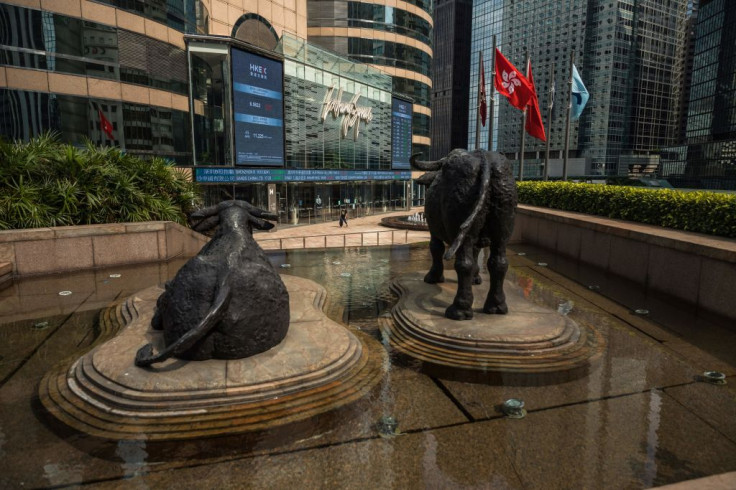
The most striking number in Hong Kong's capital markets this year is not one of its own.
In the first half of 2026, a single Chinese company completed a US listing, raising $12 million. In the same period of 2025, 39 Chinese companies raised $886 million on American exchanges. That near-freeze is the backdrop against which Hong Kong's fundraising boom should be read, because a substantial share of the capital now arriving in the city is capital that would previously have gone elsewhere.
Hong Kong Exchanges and Clearing reported HK$210.2 billion raised through IPOs in the first half, roughly US$26.8 billion and 92% above the HK$109.4 billion raised a year earlier, across 87 new listings — close to double the prior-year count.
By early August, HKEX chief executive Bonnie Chan told an event in Kuala Lumpur, proceeds had reached about US$41 billion, already surpassing the full-year 2025 total. The exchange subsequently reported HK$328.2 billion raised in the first seven months, up 154% year on year.
Second, not first
One correction is worth making early, because Hong Kong topped the global rankings in the first quarter and the ranking has since changed.
Across the first half, HKEX ranked second globally, behind Nasdaq. The US exchange raised US$113.1 billion across 45 listings, lifted by SpaceX and a series of AI-concept flotations, with five of the world's ten largest IPOs by proceeds. The New York Stock Exchange placed third at US$14.3 billion.
So the picture is not that New York has stopped attracting listings. It is that New York is attracting American AI and space companies while Chinese issuers have effectively withdrawn — and Hong Kong is absorbing that redirected flow. Two different things are happening at once, and conflating them produces the wrong story.
What is actually being listed
The composition of Hong Kong's first half is unusually concentrated in two products, both relatively new.
According to KPMG's mid-year review, the city recorded 24 A+H listings and 13 specialist technology IPOs in the first six months — each already exceeding their full-year 2025 totals — and together these accounted for more than 70% of funds raised.
A+H listings involve mainland-listed companies adding a Hong Kong line, giving international investors access to firms already trading on the Shanghai or Shenzhen exchanges. The 24 completed in six months compare with 19 across the whole of 2025. Specialist technology listings arrive under Chapter 18C, the framework introduced to accommodate pre-revenue and pre-profit technology companies, and have brought several AI firms to the market — MiniMax and Zhipu among them, both of which are preparing subsequent A-share listings.
That is a meaningful structural shift. Hong Kong is functioning less as an alternative to New York for Chinese companies and more as a staging post between international capital and mainland markets.
The pipeline suggests continuation rather than a peak. EY's Jacky Lai has said over 420 enterprises are actively pursuing publicly filed IPOs, with a further 59-plus having filed with the China Securities Regulatory Commission without yet listing.
The index has not followed
Here is the part that resists easy explanation. Capital is arriving at scale, and the Hang Seng is not reflecting it.
The index closed the second quarter lower than it stood at end-March, and stood at 25,440 on 12 August. Financial Secretary Paul Chan noted it was down around 2% year to date at the close of the first quarter.
Trading activity tells a different story from prices. Average daily turnover reached HK$319.1 billion in June, up 39% year on year, with the first-half average at HK$283 billion, up 18%. Total funds raised across all channels reached HK$346.1 billion in the first half, 22% above the prior year.
Some of this is arithmetic rather than mystery: heavy new issuance expands the market's capitalisation without lifting the prices of existing constituents, and index performance reflects the latter. But it does mean the wealth effect that policymakers hope will feed domestic consumption is weaker than the fundraising headlines imply.
Post-listing performance has been strong, at least. Goldman Sachs said in July that new shares listed across 2025 and 2026 are expected to deliver a median return of about 20% and an average of roughly 60% within three months of listing, well above previous years, citing ample market liquidity.
What to watch
Full-year forecasts have diverged widely, which is itself informative. EY expects HK$320 billion, Deloitte at least HK$300 billion across roughly 160 listings, PwC HK$380 billion, and Goldman Sachs around US$60 billion. The gap between the most conservative and most bullish is large enough to matter.
The structural variable is HKEX's listing framework review. The exchange published a consultation in March proposing changes to weighted voting rights requirements and a streamlined path for overseas-listed issuers seeking secondary listings; the consultation closed in May and conclusions are expected. Those rules will shape whether the current pipeline converts.
The external variable is whether US listings reopen to Chinese issuers. Much of Hong Kong's 2026 has been a function of that door being shut. Should it open, the flow reverses — and the pipeline of 420 applicants is a queue, not a commitment.