

Hong Kong’s AI Export Boom Is Real. It Is Also Very Narrow.
AI Demand and Tourism Drive Hong Kong's Economic Growth Amid Inflation Concerns
Hong Kong has just posted the strongest six months of economic growth in nearly five years, and the government has responded by raising its forecast for the year by a full percentage point at both ends of the range.
Releasing the Half-yearly Economic Report on 14 August, the administration revised its 2026 real GDP growth forecast to between 3.5% and 4.5%, up from the 2.5% to 3.5% range set in the May round of review. The economy grew 5.1% year on year in the first half, comprising 5.9% in the first quarter and 4.3% in the second.
Government Economist Irina Fan noted that Hong Kong has now recorded six consecutive quarters of growth above the ten-year quarterly average of 2.8%.
By any measure these are strong numbers. The question worth asking is how many things are producing them.
One channel, doing most of the work
The composition is unusually concentrated.
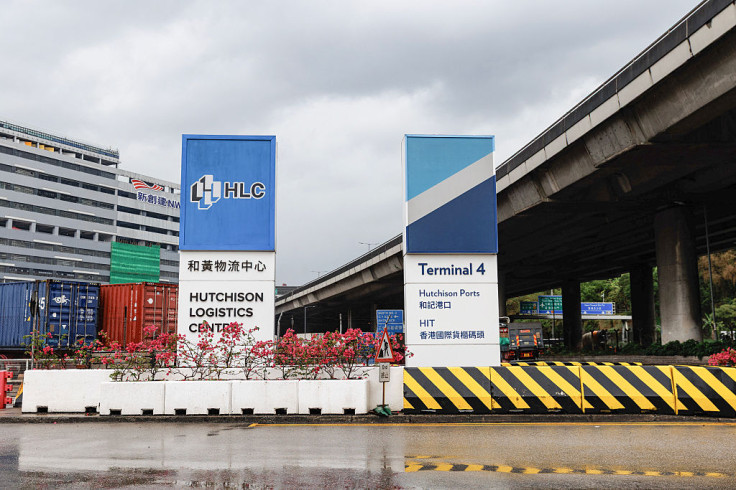
Goods exports have posted double-digit growth for five consecutive quarters, underpinned by robust trade flows and strong global demand for AI-related electronic products. In June alone, the value of merchandise exports grew 53.4% over a year earlier, with exports to most major markets increasing markedly.
The same driver appears on the investment side. First-quarter investment expenditure surged 17.7%, with AI-related electronic products the likely primary contributor — while building and construction capital spending remained in deep contraction over the same period.
That is the shape of this expansion: a single global demand cycle running through Hong Kong's trade infrastructure, alongside a domestic construction sector that has been going the other way.
There is a further caveat specific to Hong Kong that the headline export figure does not capture. Hong Kong is a re-export hub, and a substantial share of goods crossing its border originate elsewhere. A 53% surge in merchandise export value measures the flow through the territory. It does not, by itself, measure how much of that value was created in Hong Kong.
The parts that are broadening
Not everything rests on semiconductors, and the second-quarter data shows the domestic economy in better shape than a purely trade-driven reading would suggest.
Tourism has recovered substantially: the Tourism Board recorded 26.71 million visitors in the first half of 2026, up 13% year on year, supporting services exports. Private consumption expenditure rose 5.0% in the first quarter.
The labour market has also stabilised in a more convincing way than earlier in the year. Unemployment held at 3.7% in the April-to-June period, with the underemployment rate edging up 0.1 percentage point to 1.6%, and both the labour force and total employment increasing slightly. That is a meaningful improvement on the first quarter, when the same 3.7% headline rate coincided with a marginal fall in total employment — an improvement that reflected a contracting labour force rather than job creation.
HSBC has raised its 2026 Hong Kong GDP forecast from 3.8% to 4.5%. Greater China senior economist Erin Xin argued the AI demand cycle has kept external trade resilient while consumption should stay steady on improving wealth effects and stable monetary conditions, with investment set to strengthen on accelerated infrastructure development — particularly the Northern Metropolis project, which she expects to support construction spending going forward.
If that materialises, the construction contraction becomes a trough rather than a trend. It has not materialised yet.
Inflation is the near-term complication
The government's own report flags the direction of travel on prices, and it is upward.
The underlying Composite Consumer Price Index rose 1.7% in the second quarter year on year, accelerating from 1.4% in the preceding quarter, driven mainly by a sequential increase in fuel-related components following elevated international oil prices since late February. Price pressures elsewhere remained largely subdued.
Consumer price inflation is expected to rise in coming months as the earlier surge in international oil prices continues to feed through, with the administration noting that lingering geopolitical tensions in the Middle East have increased the uncertainty around the inflation outlook. Those tensions remain unresolved, with analysts warning that a prolonged closure of the Strait of Hormuz carries the risk of substantially higher crude prices.
Hong Kong's currency peg means the city imports US monetary policy rather than setting its own, so there is no domestic rate response available if imported inflation accelerates. The government named US monetary policy uncertainty, Middle East geopolitics and trade protectionism among major advanced economies as the external risks warranting close surveillance.
What to watch
The AI demand cycle is the variable that matters most, and it is entirely exogenous. Hong Kong's growth rate is currently a function of decisions made in data centres and chip fabs elsewhere — a dependency underlined by the finances of the companies driving that demand, with OpenAI's annualised revenue roughly doubling to top $40 billion.
The second is whether Northern Metropolis construction actually arrives at the scale HSBC expects, which would give the expansion a domestic engine it currently lacks.
The third is oil, and how much of it reaches the Composite CPI before the year ends.
Hong Kong is growing faster than it has since 2021. Whether that is a recovery or a cycle depends almost entirely on questions being answered outside the territory.