National Day Golden Week: 1.29 million visitors expected, but retail chief warns arrivals do not guarantee spending
Industry says visitors have less spending power than before, with growth concentrated in jewellery and cosmetics; Customs and tourism regulators step up inspections to crack down on forced shopping.

About 1.29 million mainland visitors are expected to enter Hong Kong through various control points next Wednesday, more than 5 per cent higher than last year, according to a figure announced by Chief Secretary for Administration Chan Kwok-ki after chairing an interdepartmental working group meeting on Tuesday. The estimate is more specific than the one previously given by the Travel Industry Council. But as early as July, Retail Management Association chairwoman Annie Tse had made the industry’s position clear: “Visitors’ spending power in Hong Kong has fallen significantly compared with before ... It is very difficult to achieve retail sales growth in line with the increase in visitor numbers.” Visitor arrivals and retail growth are “not directly proportional”, she said — it was her own assessment, not an analyst’s speculation.
The data from this year makes the point particularly clearly. Retail sales rose 11.8 per cent year on year in January and February, prompting Tse to describe the start of the year as “encouraging”. Monthly growth then climbed to between 12.8 and 13 per cent in March, but she immediately added that this did not represent a “broad-based rebound in consumer spending power”. During the Labour Day Golden Week in May, footfall in Tsim Sha Tsui, Mong Kok and Causeway Bay increased significantly. Yet only selected categories — including cosmetics, jewellery, personal care and healthcare products — saw clear benefits, and only where retailers were willing to spend heavily on promotions. Many Hong Kong residents travelled north in the first three days of the holiday, while a black rainstorm also hit the city, leaving local retail performance mixed. By July, retail sales had fallen to a yearly low of HK$31 billion, with year-on-year growth narrowing to 4.5 per cent. Tse attributed the slowdown to 25 days of rain, typhoons and Hong Kong residents travelling abroad during the summer holidays. In late August, she described the outlook for September as “not too negative”, but added a caveat: with only two days off for the Mid-Autumn Festival, mainland visitors might prefer to wait until National Day Golden Week to visit Hong Kong, and whether Mid-Autumn spending would boost the market “remains to be seen”. In other words, even one week before the holiday, the association itself had still declined to give a specific forecast for retail growth over this year’s National Day Golden Week.
Put another way, the apparently straightforward logic that “more visitors mean double-digit retail growth” has been repeatedly disproved by the same set of data during the first three quarters of this year. Growth has been concentrated in a small number of categories, such as jewellery and cosmetics, and driven by the scale of promotions rather than visitor numbers alone. Overall growth has narrowed steadily from double digits in the first quarter to 4.5 per cent in July. That is also why, although the Immigration Department and the Travel Industry Council have both highlighted the expected rise in visitor numbers, neither the government nor industry bodies have issued a corresponding forecast of double-digit growth in retail or restaurant sales. This point was not mentioned in other reports about the expected 1.29 million arrivals.
On enforcement, the authorities are doing more than issuing verbal warnings. Customs officers and the Travel Industry Authority inspected registered shops in shopping areas including Tsim Sha Tsui and Hung Hom on September 21, reiterating the requirements of the Trade Descriptions Ordinance. Chief Executive John Lee Ka-chiu also pledged on September 15 to “crack down hard on forced shopping”, saying that non-compliant tour guides would have their licences revoked. This is not an empty warning: earlier this year, the Travel Industry Authority revoked the licences of Guoming Travel, Pak Lok Travel Agency and tour guide Sun Koon-ying after they were found to have pressured members of mainland tour groups into shopping. Guoming Travel’s registered address was a commercial centre in Hung Hom. The inspections ahead of this Golden Week are therefore based on an enforcement case that has already been carried out, rather than being merely a routine pre-holiday publicity exercise.
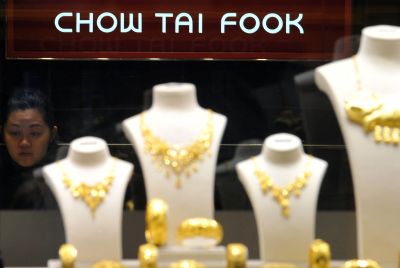
For businesses, the message is that Golden Week footfall will arrive, but the benefits will not necessarily be shared evenly. Jewellery, drugstore cosmetics and personal care retailers are more likely to benefit, provided they are willing to offer discounts and promotions. General retailers that rely on individual visitors may see only limited growth, judging from the experience of the similar holiday in May. For investors watching Hong Kong-listed retail stocks — including Sa Sa International (0178), Chow Tai Fook Jewellery (1929) and Luk Fook Holdings (0590), which have significant exposure to visitor spending — the performance of these companies over Golden Week will not receive meaningful confirmation until the Census and Statistics Department releases retail sales figures for September and October in early November. Only then will it be possible to assess whether the trend of “growth narrowing month by month” during the first three quarters has continued.
- MOST POPULAR IN Economy