US Yields Hit 19-Year High, but HK Prime Rate Stays at 5%
Rising US borrowing costs and oil prices are adding pressure to Hong Kong's interest-rate outlook, though lenders have yet to raise their best lending rates.

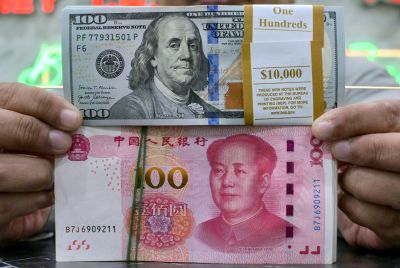
The US 10-year Treasury yield jumped to 5.25% on Monday, its highest in 19 years, while HSBC and Bank of China (Hong Kong) still lend to their best borrowers at a 5% prime rate.
Bloomberg reported that the 10-year rose 9 basis points after President Donald Trump rejected Iran's latest proposal to reopen the Strait of Hormuz, and that the 30-year reached 5.57%, the most since 2004. The US Treasury's own par yield data put Monday's closes at 5.24% and 5.56%, up from 5.17% and 5.49% on Friday.
The pressure carried into Tuesday. TheStreet reported that the S&P 500 fell as consumer confidence dropped to a 12-year low, with West Texas crude at $92.03 and Brent at $104.80 in early trading. Brent cost about $72 before the US and Israel attacked Iran in late February, according to AP. US and Iranian officials held separate indirect talks with mediators on Monday.
Hong Kong's peg to the US dollar ties it to that market. The Hong Kong Monetary Authority raised its base rate to 4.25% on 17 September after the Fed lifted its target range to 3.75%–4.00%, but banks did not follow. HSBC said it would keep prime at 5%, and Standard Chartered kept its own at 5.25%. The Standard reported one-month HIBOR at 2.9% that day.
That matters for mortgages because prime acts as a ceiling. HSBC's published terms for one of its HIBOR-linked mortgage plans, as described by EBC Financial Group, price the loan at one-month HIBOR plus 1.3%, capped at prime minus 1.75%. At 5% prime the cap is 3.25%. With HIBOR at 2.9%, the uncapped formula would give 4.2%, so the cap is what is holding payments down.
Knight Frank's Esther Liu was quoted by the South China Morning Post as saying local banks are likely to raise prime only after back-to-back Fed hikes or a significant rise in funding costs. The September move was the Fed's first hike since July 2023. CME FedWatch data, cited by Babypips, showed roughly a 70% probability of a second quarter-point hike at the Fed's 28 October meeting.
- MOST POPULAR IN Economy