China’s Solar Capacity Overtakes Coal: A Milestone Amidst Renewable Energy Challenges
China's solar capacity milestone highlights growth and challenges in renewable energy transition
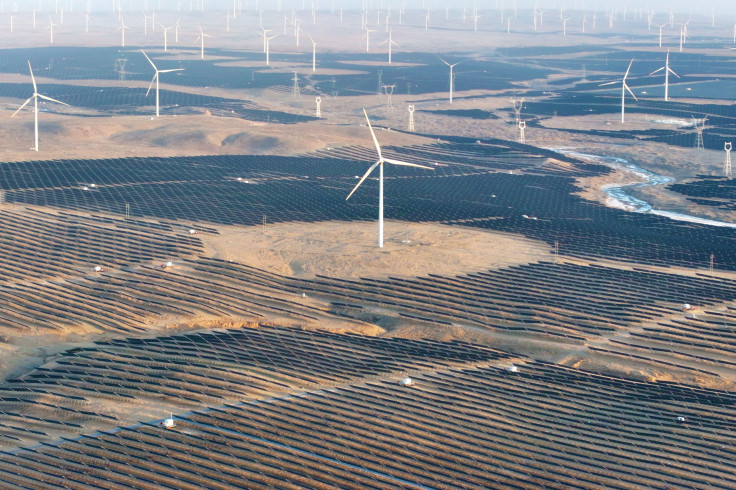
China's solar fleet is now bigger than its coal fleet for the first time in the country's history. It happened in the same year new solar construction collapsed by nearly 70%.
The National Energy Administration announced the milestone on September 1, drawing on data it had already published on August 25: installed solar capacity reached 1.286 billion kilowatts by the end of July, edging past coal's 1.285 billion kilowatts to become China's single largest source of generating capacity. Solar now makes up 31.5% of the country's total installed base of 4.08 billion kilowatts, up from 26.4% just two years earlier. It generated 802.4 billion kilowatt-hours in the first seven months of 2026, up 15.5% from a year earlier and equal to about 13% of national electricity consumption — roughly one in every eight kilowatt-hours used nationwide.
The climb has been fast. Solar capacity stood at about 250 million kilowatts at the end of 2020; by the end of 2025 it had passed 1.2 billion, a fivefold jump in five years.
What the milestone obscures is that the industry building it just hit the brakes. New solar installations totaled 59.59 gigawatts in the first five months of 2026, down almost 70% from the same period a year earlier, after developers rushed to connect projects ahead of a May 2025 deadline tied to national power-pricing reform, then pulled back once the rush passed and fixed feed-in guarantees gave way to market-priced electricity sales.
The slowdown has coincided with more wasted power, not less. National solar curtailment climbed to 9.2% in January and February, from 6.1% a year earlier; wind curtailment rose to 8.5%, from 6.2%, according to China's grid-connection monitoring center. In resource-rich but grid-constrained provinces the numbers are worse: Tibet's solar utilization rate fell to 60.8%, Qinghai's to 78.7%, Gansu's to 82.5%.
"This is a milestone in China's shift toward green, low-carbon energy," Liu Zhiqiang, deputy director of planning at the China Electricity Council, said of the crossover, while cautioning that coal remains the "safety backstop" because solar's output is intermittent. Ye Jing, who tracks power supply and demand at the same industry body, said new energy sources would keep gaining share and that solar would stay China's top power source going forward.
That framing — a smooth, inevitable ascent — is what most coverage of the crossover has offered. The installation crash and the curtailment spike are the two numbers that framing leaves out, and they point to a different read: capacity is arriving ahead of what the grid can absorb, not behind it.
The government's own targets back that up. A renewable-energy plan for 2026 through 2030, issued by the National Development and Reform Commission and the NEA on July 23, calls for combined wind and solar capacity to exceed 2.8 billion kilowatts by 2030, generating more than 4 trillion kilowatt-hours a year — 30% of national electricity consumption, up from roughly 23% today. Combined wind and solar capacity already stands at about 1.98 billion kilowatts. Closing the remaining 820-gigawatt gap by 2030 would require adding roughly 180 gigawatts a year — well under the 430 gigawatts of wind and solar China installed in 2025 alone. The capacity target, in other words, is not the hard part. Storage, transmission and market rules that let panels run at something closer to coal's reliability are.
The squeeze has reached Hong Kong's stock exchange. GCL Technology Holdings (3800.HK), one of the world's largest polysilicon producers, narrowed its 2025 net loss to 2.87 billion yuan but has faced fresh pressure this year as polysilicon prices fell more than 40% between January and July. Citi cut its price target on the stock in May and switched its 2026 forecast from a profit to a full-year loss, citing weak polysilicon demand since the first quarter.
The July plan also set a target for wind and solar's "reliable capacity contribution" — a measure of how much output can be counted on during peak summer and winter demand — to reach 20% by 2030, roughly double today's level, without yet publishing a timeline for the storage buildout that would get it there. The NEA's next monthly capacity report, covering August, is due in late September.
- MOST POPULAR IN Economy