Mac Mini Surprises with Apple’s 2nm M6 Chip Debut, Ahead of iPhone 18
Apple's latest Mac Mini features the groundbreaking M6 chip, marking a shift in the company's chip deployment strategy.

Apple's first chip built on a 2-nanometer process didn't go into an iPhone. It went into a Mac mini.
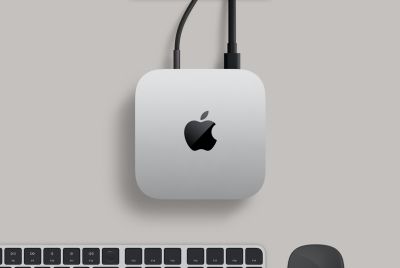
The company unveiled the new Mac mini on Tuesday, alongside a refreshed Mac Studio, giving the desktop's entry-level M6 chip the honour of debuting Apple's most advanced manufacturing node before the iPhone 18 gets anywhere near it. In Hong Kong, the new M6 Mac mini starts at HK$7,299, according to Apple's Hong Kong newsroom announcement — HK$800 more than what the outgoing M4 model was already selling for after a price rise in June.
Why the cheap Mac got there first
Apple has historically put a new manufacturing process into an iPhone chip before it trickles down to the Mac. This time the order flipped, and the explanation traces back to a decision made months earlier about the M6 family itself. Bloomberg's Mark Gurman had reported that Apple was skipping M6 Pro and M6 Max chips entirely, choosing instead to push resources toward the following generation, with the fuller M7 lineup expected in 2027. That left the base M6 as a standalone chip with nowhere else to go this year, so it landed in the cheapest new Mac Apple had ready to ship.
The chip itself is a genuine step up: a 12-core CPU, a 12-core GPU, and a dual 16-core Neural Engine that Apple says roughly doubles on-device AI throughput compared with the outgoing M5 generation. The iPhone 18 Pro's A20 chip, due at Apple's September event, is expected to stay on the older 3-nanometer node for now.
A second price jump for Hong Kong buyers
The launch lands awkwardly for Hong Kong shoppers who were already stung once this year. Apple quietly raised Hong Kong prices across its Mac and iPad lines in late June, and the Mac mini took the biggest hit: the base M4 model jumped from HK$4,599 to HK$6,499, a 41 percent increase, as the Standard reported at the time. Tuesday's launch price of HK$7,299 for the new M6 model means the base Mac mini has now risen by close to 59 percent in under two years.
The driver both times was the same: a global squeeze on memory chips, which Apple's finance chief has told investors wiped out more than the company's entire sequential profit margin decline this year, as memory makers shift capacity toward the higher-margin chips bought by AI data centres, leaving less supply for consumer devices.
Mainland China buyers saw an identical pattern. The base M6 Mac mini there starts at 6,999 yuan, up from 4,499 yuan when the M4 model launched in 2024 — a 2,500-yuan rise that also came in two steps, with Apple quietly lifting the price to 5,999 yuan in June before Tuesday's launch pushed it higher again, according to reporting by The Paper.
For a machine that spent most of the past two years marketed as the affordable way into a Mac — and, more recently, as a cheap way to run AI models locally — the pattern is now consistent across Apple's two biggest Greater China markets: better silicon, and a noticeably heavier price tag to go with it.
- MOST POPULAR IN Technology