Bessent’s $500 Million Yen Move: Unveiling the Truth Behind US Currency Strategy
Unpacking the US Treasury's Unexpectedly Modest Yen Intervention

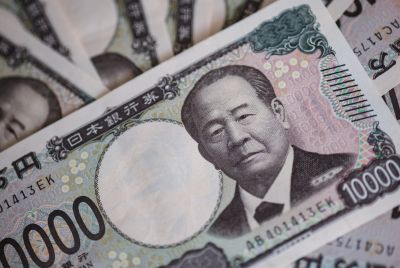
Five hundred million dollars. That's the entire size of the intervention Washington used to help save the yen in July — not the $5 billion to $10 billion traders assumed after a photographer caught Treasury Secretary Scott Bessent's to-do list at a cabinet meeting.
The gap comes from a reconstruction by the Financial Times' Alphaville column, which tracked the Treasury's weekly foreign exchange reserve data and stripped out valuation swings caused by exchange-rate moves. In the week after the July 31 trade, euro holdings at the Exchange Stabilization Fund and the Fed's System Open Market Account fell by roughly $495 million, while yen holdings rose by about $502 million. Both numbers point to the same figure: around $500 million actually spent, not the $5-10 billion range scrawled on Bessent's notepad and photographed by Reuters at Camp David. Alphaville cross-checked the math with Brad Setser, a former deputy assistant Treasury secretary now at the Council on Foreign Relations, who arrived at a similar estimate.
That $500 million doesn't even register against the roughly $26.3 billion in euro-denominated firepower the Treasury has available to deploy — meaning the operation that rattled the euro, blindsided the European Central Bank and revived talk of a more activist "Bessent doctrine" on currencies used less than two cents on the dollar of what Washington could have spent.
The bigger story is what didn't show up where it was supposed to. US law requires Treasury to publish ESF financial statements on a set schedule after each reporting period closes; August 30 was meant to be the date the market got an official number. Alphaville reviewed the July ESF report and found no mention of euro/yen cross positions in the notes — including Note 9, which is where any signed or renewed forward contracts and their liabilities should appear if that's the instrument Treasury used. Two explanations survive: either Treasury left something out of the filing, or the trade was a spot transaction executed on July 31 that settled after month-end and simply missed the reporting window by design, not omission. Alphaville leans toward the spot-trade explanation, and says it asked Treasury to explain the gap; as of publication, Treasury had not responded.
Context makes the mismatch sharper. This was only the third time in roughly three decades that the US has intervened directly in the yen — after 1998's Asian financial crisis and 2011's post-Fukushima G7 action — and the first coordinated yen-buying operation with Tokyo in more than a decade. Japan's own side of the operation dwarfed Washington's: Goldman Sachs estimated Tokyo deployed as much as $85 billion in the first two days alone, on top of a record ¥11.73 trillion ($73.4 billion) intervention the Ministry of Finance had already run in May. Set against that scale, the US contribution was closer to a signal than a commitment.
It's also not the only place the ESF's opacity has drawn scrutiny this year. Senate Banking Committee Democrats, led by Elizabeth Warren, sent Bessent a letter demanding a detailed justification for the yen operation and disclosure of how much taxpayer-linked money was spent — explicitly comparing it to the $20 billion ESF-backed peso bailout Treasury arranged for Argentina in 2025, which Congress also learned about only after the fact. Treasury has not detailed its reasoning publicly in response to either episode. The next monthly ESF filing is the next point at which that pattern either breaks or holds.
- MOST POPULAR IN World