US Strikes Iran Again, Oil Tops $92 As Wall Street Slips
First U.S. military action in a month reignites conflict with Iran, impacting global oil prices.

U.S. forces struck Iranian rocket launchers in the Strait of Hormuz on Sunday, breaking a monthlong lull in the six-month war between Washington and Tehran and sending Brent crude above $92 a barrel as Wall Street opened September under pressure.
Forces with Iran's Revolutionary Guard were preparing to launch rockets carrying sea mines into the waterway when U.S. jets struck two launchers on Larak Island, a U.S. official told the Associated Press. Iran's Guard said in a statement carried by state media that the strike caused "the martyrdom and injury of several of our fighters and compatriots," without giving an exact toll.
Iran retaliated within hours, striking American positions in Jordan — the first direct exchange between the two militaries in a month, NBC News reported. President Trump told Fox News he would "hit them hard," vowing a response to the strikes.
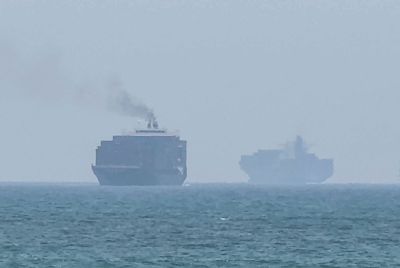
Benchmark U.S. crude rose 1.8% to $84.94 a barrel and Brent gained 1.9% to $89.79 on Sunday after the initial strike. Brent extended its climb past $92 a barrel by Tuesday morning, Yahoo Finance reported, as traders weighed the risk to roughly a fifth of the world's oil that moves through the strait.
The S&P 500 closed August down 0.3% at 7,686.14 on Monday, the Dow Jones Industrial Average fell 374 points to 53,185.90, and the Nasdaq slipped 31 points to 26,370.89, the Associated Press reported. Futures pointed lower again Tuesday as the 10-year Treasury yield climbed to 4.78%, its highest intraday level since January 2025.
The 30-year yield, near 5.27%, has held close to its highest level since 2007 for most of the past six weeks — a run tied to swelling federal deficits and heavy bond issuance that predates the weekend's strikes.
Trump has not detailed what a harder response would look like. Sunday's strike was the first American military action against Iran in a month, in a war now in its seventh month.
- MOST POPULAR IN World