From Startup to Unicorn: AfterQuery’s $3.2 Billion Valuation Explained by Key AI Benchmark Success
Inside AfterQuery's meteoric rise and its pivotal role in AI training data innovation.

Inside Nvidia's technical report for Nemotron 3 Ultra, published in June, one outside company gets named directly: AfterQuery. Feed the model a batch of office tasks that mimic professional judgment calls — read a file, produce a deliverable, get judged the way a manager judges a junior analyst's work — and its score on GDPval, a benchmark built from real jobs across the nine largest sectors of the US economy, moves from 35.3 to 46.7. That specific training recipe now sits underneath a company Forbes reported this week has been valued at $3.2 billion, ten times its price tag from five months earlier and, according to Y Combinator partner Gustaf Alströmer, the fastest run to unicorn status in the accelerator's 20-year history.
The company is barely old enough to have a origin story with any texture to it. Spencer Mateega and Carlos Georgescu met in a Google-run computer science summer program in high school, interned together at Meta, and stayed close through college. In February 2025, both still enrolled — Mateega finishing a finance degree at Wharton and a computer science master's at Penn, Georgescu a year from a CS degree at the University of British Columbia — they put together a Y Combinator application in 48 hours with no product and no plan beyond getting to San Francisco. Their first idea, an AI agent for financial analysis, ran into a wall: even frontier models kept failing at the parts of white-collar work that involve ambiguous instructions and judgment calls, because nothing in their training data taught them how a professional actually handles that. Georgescu left school to work on the fix full-time; Mateega finished his degrees. What they built instead was a pipeline for capturing how doctors, lawyers, engineers and financial analysts reason through real tasks, then selling that as training data.
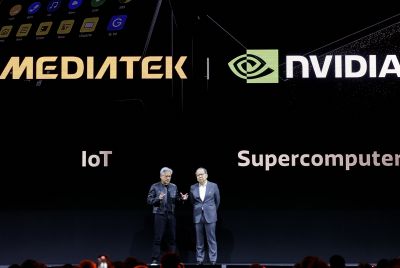
The Nvidia partnership shows what that looks like mechanically. Nemotron 3 Ultra's post-training process includes a step called Multi-teacher On-Policy Distillation, where specialized "teacher" models trained on narrow domains get distilled into the main model. For office and workplace tasks, Nvidia built that teacher using what its own report calls "AQ tasks" — AfterQuery data chosen because it shares structure with GDPval: reasoning grounded in actual files, multi-step analysis, and a final output that has to satisfy a human judge. AfterQuery says it's the only data partner named anywhere in the report. A similar pattern shows up with the legal-AI startup Legora, where AfterQuery helped build a 5,161-case benchmark spanning 28 practice areas; Legora says the findings let it improve its own product's output quality by 5% in a single month.
None of this happened in isolation. Scale AI's valuation reached roughly $29 billion after Meta bought a 49% stake in June 2025 — a deal that promptly cost Scale business from Google, OpenAI and xAI, all wary of feeding data through a vendor half-owned by a rival. Some of that work went to Surge AI, a bootstrapped, reportedly profitable company said to be in talks near a $25 billion valuation. Some went to Mercor, which TechCrunch and Bloomberg have reported is doubling to a $20 billion valuation on roughly $2 billion in annualized revenue. Turing, a smaller player focused on vetted engineers, sits at $2.2 billion on about $300 million in revenue. The pattern across all of them is the same: capital chasing a specific, narrow input — verified professional reasoning — not the older business of cheap, high-volume labeling. Forbes also reported that AfterQuery, unlike some US peers, maintains relationships with Chinese AI labs, a positioning that reads as an attempt to stay usable by frontier labs on every side of an increasingly split market.
AfterQuery says it's profitable and has already lined up a lead investor for the round Forbes described; the company declined to comment on the details. Its disclosed numbers are self-reported rather than independently audited: $100 million in annualized revenue in April, "hundreds of millions" by July, according to Mateega's own posts, and close to 100,000 vetted professionals on the platform.
What none of that establishes is a moat. Neither AfterQuery nor Mercor nor Surge discloses exclusive contracts with the professionals who generate the data, and any of them, in principle, could work with more than one buyer at once. The edge Mateega described to Forbes back in April wasn't the size of the network — it was the software that scores a submission before a client ever sees it, checking whether a task was pitched at the right difficulty and whether the output is actually usable. That's the part of the business a well-funded rival could try to copy. Mercor, notably, is separately in talks with Nvidia for a funding round targeting a $20 billion valuation, according to The Information — meaning the company whose own technical report just made AfterQuery's case may soon be writing a check to its closest competitor too.
- MOST POPULAR IN Technology