Global No. 1 in shipments, but carrying RMB5 billion in accumulated losses: ASR Microelectronics files for Hong Kong listing as Alibaba halts sell-down
The company posted its first half-year profit in the first half of 2026, but remained loss-making after excluding extraordinary items; customer concentration, rising inventories and heavy R&D spending are key risks.

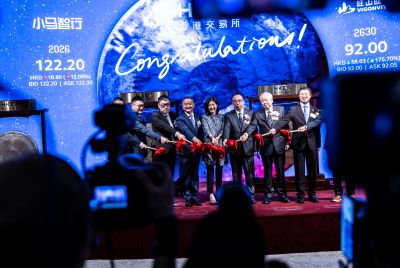
ASR Microelectronics (688220.SH) filed an application on September 11 to list on the Main Board of the Hong Kong Stock Exchange. The joint sponsors are Haitong International and Morgan Stanley. The STAR Market-listed company carries a striking label: more than RMB5 billion (about HK$5.87 billion) in accumulated undistributed losses.
According to Frost & Sullivan, ASR Microelectronics ranked first globally in cellular connectivity chip shipments in 2025, with a market share of 37.8 per cent. Why, then, has a company that leads the world in shipments continued to record losses? It is also worth noting that around the time of its listing application, the company’s second-largest shareholder, Alibaba Network (Alibaba (China) Network Technology Co), was carrying out a sell-down plan announced in May. The disposal raised about RMB703 million (about HK$820 million), but was ultimately halted before the original plan was completed.
The company is answering the same question in two ways: where exactly does its value lie?
The backdrop to the turnaround: still bleeding after adjustments, but losses are narrowing
ASR Microelectronics recorded revenue of RMB2.451 billion in the first half of 2026, up 29.15 per cent year on year. Net profit attributable to shareholders was RMB84.244 million, marking its first half-year profit since listing. However, after excluding extraordinary items, net profit attributable to shareholders was negative RMB58.671 million. In other words, its core business remained loss-making once one-off gains were stripped out.
On an annual basis, losses have in fact been narrowing. Net loss was RMB506 million in 2023 and widened to RMB693 million in 2024, but narrowed to RMB390 million for 2025 as a whole, down 43 per cent year on year. Combined with the first-half profit in 2026, the overall trajectory is one of continuing but gradually shrinking losses, rather than prolonged bleeding without progress.
The reason accumulated undistributed losses exceed RMB5 billion is that the figure covers all historical losses accumulated on the balance sheet since the company was founded in 2015, rather than only its post-listing performance. If only the four years from its A-share listing in 2022 through 2025 are counted, the company’s combined net loss attributable to shareholders was about RMB1.84 billion. The two figures use different definitions and should not be conflated: the RMB5 billion reflects the entire historical burden since incorporation, while the RMB1.8 billion reflects performance over the years since listing. Under the company’s articles of association, future profits must first be used to cover accumulated losses, and no dividends may be paid until that threshold is reached.
The root of the losses lies in research and development spending. ASR Microelectronics has maintained high R&D expenditure for years: RMB1.116 billion in 2023, RMB1.242 billion in 2024 and RMB1.299 billion in 2025, with RMB663 million spent in the first half of 2026 alone. However, R&D expenditure as a share of revenue has declined each year, from 42.9 per cent in 2023 to 36.7 per cent in 2024 and 34.0 per cent in 2025. This suggests fixed R&D costs are gradually being diluted as revenue expands, rather than remaining consistently high.
Gross margins were 22.5 per cent, 20.5 per cent and 23.3 per cent respectively from 2023 to 2025, remaining relatively low. The listing document shows that gross margin rose sharply to 28.5 per cent in the first half of 2026, compared with 21.4 per cent in the same period last year, driven mainly by a higher proportion of high-end products such as 5G chips and lower unit costs. Even with an improvement of more than seven percentage points, however, the margin was still insufficient to cover annual R&D spending of about RMB1.3 billion. In other words, the current “profit” is driven more by revenue growth and economies of scale than by a fundamental transformation in the business model.
Major customer unidentified, with supply chain ties running both ways
In its listing prospectus, ASR Microelectronics has kept the identity of its largest customer anonymous. The customer accounted for between 37.1 per cent and 42.7 per cent of sales in the periods covered — meaning that more than one yuan out of every three yuan in sales came from this unidentified customer. For investors, reliance on a single customer is one of the biggest risks: if the customer switches suppliers or demands lower prices, the impact on results would be direct. The information disclosed in the prospectus is insufficient to determine whether this level of concentration is normal for the industry.
The second-largest customer, referred to as “Customer B”, presents another layer of complexity. According to media reports, Customer B is an unlisted electronic components distributor founded in 2010 and headquartered in Shanghai. It accounted for between 16.4 per cent and 22.2 per cent of ASR Microelectronics’ sales in the periods covered. More notable is the two-way trading structure: Customer B distributes ASR Microelectronics’ own-brand baseband chips to downstream module manufacturers, while also supplying memory chips to ASR Microelectronics. Both sides say the purchase and sales terms were negotiated independently and that they have no connected relationship.
Cross-purchasing between fabless chip designers and distributors is not unusual, but excessively high proportions can create scope for suspicions of improper benefit transfers and market price manipulation. Publicly available information currently contains no dedicated audit data verifying the fairness of the transactions. Investors should continue to monitor the issue without jumping to conclusions.
Inventory rises from RMB1.3 billion to RMB2.2 billion
Another indicator warranting attention is inventory. ASR Microelectronics’ inventory has risen steadily over the past two years, from RMB1.351 billion at the end of 2024 to RMB2.155 billion by the middle of 2026. In the chip industry, a build-up in inventory usually points in one of two directions: slowing demand leading to unsold goods, or deliberate stockpiling in anticipation of the next wave of order growth.
ASR Microelectronics’ products are mainly used in equipment such as internet-of-things modules and communications terminals. Price competition in the IoT module market has intensified in recent years, to some extent weakening the bargaining power of upstream chip suppliers. If market demand falls short of expectations, the high inventory level could require impairment provisions, directly affecting profit for the period. This is an indicator investors should watch closely when reviewing the prospectus.
Alibaba’s sell-down: planned in advance, but halted midway
ASR Microelectronics has longstanding ties with Alibaba. In 2015, Alibaba acquired the company for about RMB5 billion, followed by multiple rounds of restructuring and integration. ASR Microelectronics’ A-shares began trading in January 2025. From October that year, Alibaba Network, a shareholder, began selling down its stake in stages. Across several rounds, it raised more than RMB1 billion, reducing its holding from 15.43 per cent to about 12.43 per cent.
On May 23, 2026, Alibaba Network disclosed another proposed sell-down plan. It intended to dispose of no more than 12.549 million shares, or no more than 3 per cent of total share capital, through block trades and centralised bidding between June 15 and September 14. By September 10 — about a week after ASR Microelectronics filed its application with the Hong Kong exchange — Alibaba Network had sold only 7.7658 million shares, representing 1.8565 per cent of total share capital, and raised about RMB703 million. It had completed just 61.9 per cent of the plan’s upper limit before voluntarily announcing the early termination of the sell-down. It explicitly said the remaining 4.7833 million shares would not be sold.
In other words, this sell-down was not a new move deliberately launched by Alibaba around the time of the listing application. It was an established plan disclosed four months before the filing. What is more notable is that Alibaba chose to halt the plan before completing it, rather than selling all of its remaining shares. Alibaba had already carried out several rounds of disposals, and its book profit is believed to be substantial after its holding cost was diluted through successive cash-outs. Large shareholders selling at high levels are often interpreted by the market as a sign of caution. But in this case, stopping before selling the full amount could also be viewed as a relatively restrained signal. The market may interpret it in different ways, and further information is still needed to establish what it means.
- MOST POPULAR IN Business