

Nepal Urges Tourists Back Despite $31 Million Flood Impact
Minister Paudel's Social Media Campaign Aims to Revive Nepal's Tourism Post-Floods
Nepal's tourism minister picked social media, not a press conference, to make his case: a video, a hashtag, and a line borrowed from a trekking brochure. "Our mountain trails, trekking routes are still waiting for you," Khadak Raj Paudel said, days after floods killed more than a thousand people and left hundreds of foreigners unaccounted for.
The government's own crisis modeling shows why he couldn't wait. A preliminary assessment compiled for Nepal's tourism-recovery task force estimates that a mere 5% drop in annual visitor arrivals would strip roughly $31.4 million from an industry that pulled in about $628.4 million last year from 1.16 million international visitors. Tourism accounts for close to 7% of national output and underwrites more than a million jobs — guides, porters, lodge owners, farmers who sell to trekking lodges — concentrated in places with almost no other income source.
That math lands on an economy that was already limping. The World Bank had penciled in growth of just 2.3% for this fiscal year, a downgrade tied to last September's Gen Z-led unrest, which alone cost Nepal an estimated $586 million. Reconstruction from the floods could add another $4 billion to $5 billion in spending needs, Finance Minister Swarnim Wagle has estimated — close to a tenth of the entire economy, on top of hydropower damage that knocked out roughly 360 megawatts of generating capacity.
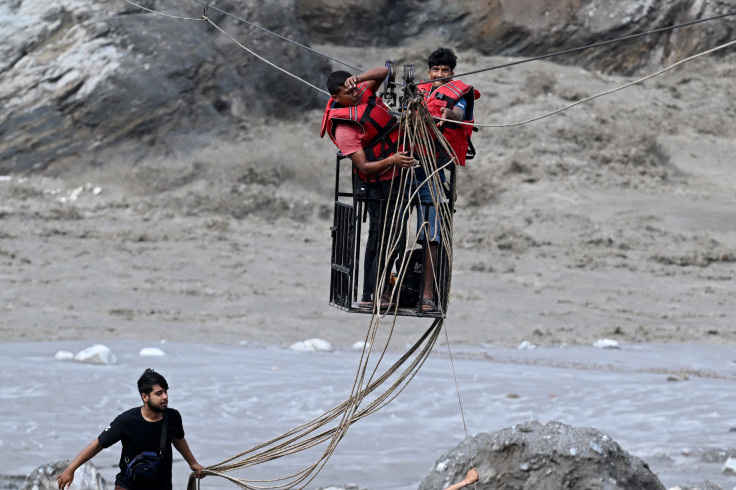
The flood itself began as a glacial collapse in the Bhote Koshi valley on August 26, sending ice, mud and boulders through settlements with little warning. Nepal's disaster authority puts the toll at more than 1,000 dead and nearly 4,000 people still missing; separate counts from late August and early September, gathered as search teams reached more remote terrain, ranged from roughly 900 to 990. Around 583 to 590 of the missing are foreign nationals, from close to 40 countries, many of them trekkers, pilgrims and hydropower workers caught in valleys far from Kathmandu.
That geography is the pitch's real hinge. The tourism task force's own damage map draws a tight line around the worst-hit corridors — Rasuwagadhi-Timure, Langtang, Syabrubesi, Gosaikunda, Nuwakot-Trishuli — and treats the rest of the country, including Kathmandu Valley and the main Everest and Annapurna approaches, as facing reputational rather than physical damage. Paudel's video is an attempt to get that distinction to travelers before booking season locks in without them.
The disaster also lands on Prime Minister Balendra Shah's government less than a year into office, a 36-year-old who took power on the back of youth frustration with the political establishment. Neither Kathmandu nor the tourism board has yet put a specific dollar figure on what the floods cost the industry directly — the $31 million-per-5% figure is a projection, not a damage count, and that number is still being built.